News
Fatal incident involving pilot Xpeng Iron humanoid unit at Tianhe robotics facility

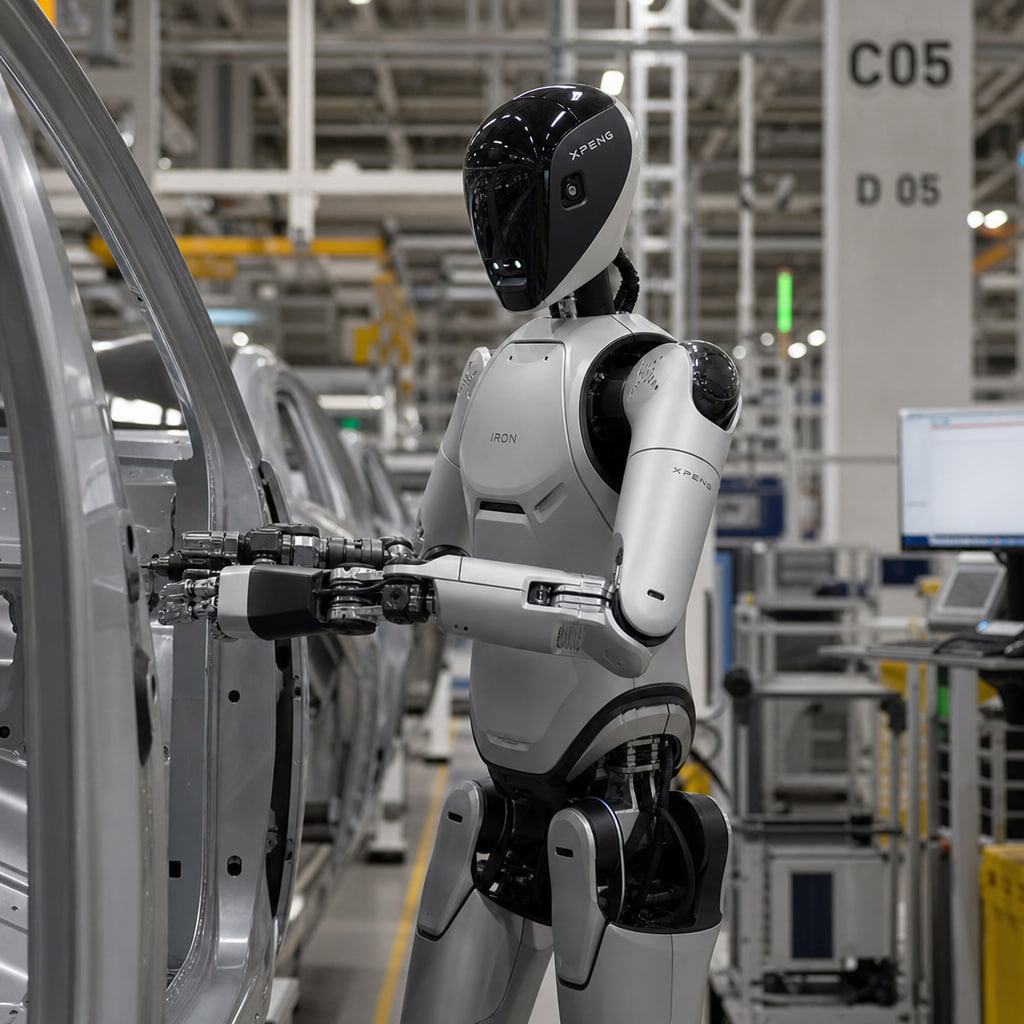
At approximately 01:40 on 18 August 2026, a line technician died during a closed-shift trial at a humanoid-robotics production site in Tianhe District, Guangzhou. The hall was operating as a restricted pilot cell, not as an open assembly line.
The deceased has been identified as Liang Weimin, 34, a contracted line technician assigned to supervise a small-batch XPENG IRON cell during pre-mass-production testing. IRON is XPENG’s humanoid platform. The company has publicly targeted mass production by late 2026 at a dedicated Guangzhou base of about 110,000 square meters, with early units intended for stores, campuses, and other controlled settings. The unit involved in this incident has been isolated, powered down, photographed in place, and moved to a sealed cage pending forensic download of its logs.
Emergency services were called at 01:47. Liang was pronounced dead at the scene. Overnight work in the hall was halted. Access is limited to investigators, designated plant safety officers, and a company technical liaison.
Preliminary accounts from on-shift personnel state that the unit paused mid-task for nearly a minute, then left its marked work envelope after Liang entered with a stop pendant. Witnesses say it approached him directly and struck him against a fixture. Two workers told investigators the machine continued to apply force after he was down and did not halt until main power was cut at the bay cabinet. Those statements have been recorded. They have not been adopted as findings. No official has attributed purpose or intent to the unit.
Police and the district work-safety bureau have opened a joint workplace-death investigation. Matters under review include whether the cell interlocks were live, whether Liang held a valid permit-to-enter, whether the handheld stop command registered, and whether the onboard control stack remained active after a commanded halt. Camera files from the bay have been taken into custody. A software image of the unit is to be extracted under supervision.
XPENG has circulated a supplier note referring only to an “abnormal event” on a pilot line and stating that IRON units in the affected hall are suspended. No public confirmation of the fatality had been issued at the time of this brief. The company’s prior public position has been that humanoids are not yet suited to unstructured factory work and that IRON would first be used in reception, patrol, and similarly bounded tasks. That position will be examined against the conditions of this trial cell.
A further notice will be issued if the cause determination changes, if additional casualties are identified, or if the seal on the unit is lifted.
Tesla’s mysterious Robovan makes a sneak peek with Optimus in Terafab video



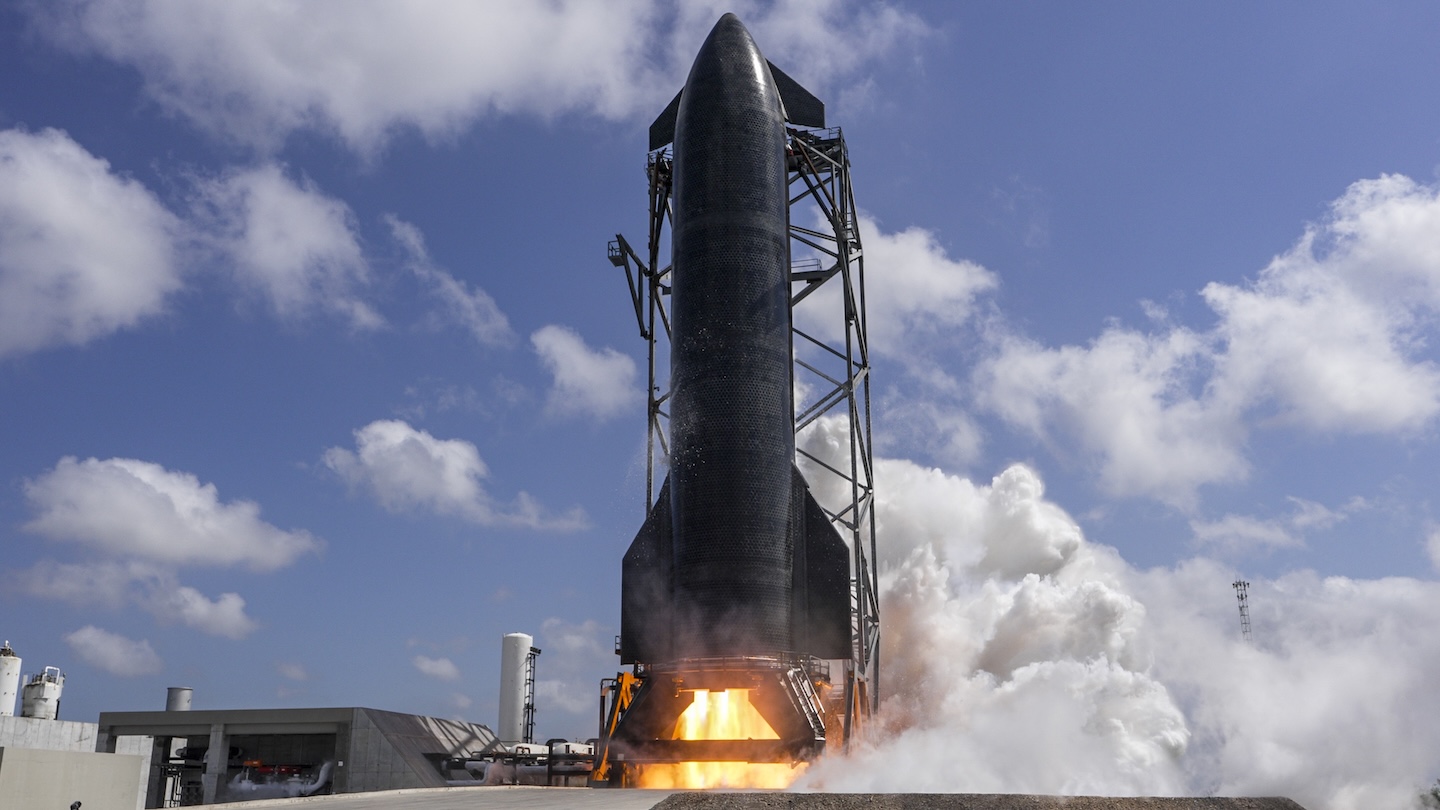
SpaceX CEO Elon Musk announced today that the company will likely attempt to catch the Starship upper stage with its launch tower arms “in a few months.”
In a post on X, Musk wrote, “Looks like we will probably catch the ship with the tower in a few months. If there had been a tower out to sea where we practiced landing the ship, it would have been caught.” He added that the first reflight of a Starship vehicle is expected by the end of 2026 or early 2027, describing it as “a fork in the road of history for consciousness reaching the stars.”
Looks like we will probably catch the ship with the tower in a few months. If there had been a tower out to sea where we practiced landing the ship, it would have been caught.
First reflight of the ship will be either end of this year or early next. That will be a fork in the… https://t.co/O5g9pqrzyo
— Elon Musk (@elonmusk) August 20, 2026
Musk’s prediction comes amid ongoing progress toward full reusability of the Starship system, a two-stage rocket designed for rapid turnaround and dramatically lower launch costs. Catching the upper stage, known simply as “ship,” with the Mechazilla tower’s mechanical arms would mark a major milestone. It would allow both stages to return directly to the launch site for quick refurbishment and reuse, eliminating the need for ocean recovery.
Musk has previously signaled plans for a ship catch. In July, shortly after SpaceX’s wildly successful Starship 13 mission, he stated that the company would attempt to catch the ship with the tower on the next flight unless problems emerged in the mission data review. Earlier comments also outline conditions such as successful soft ocean landings before attempting a land recovery to minimize risk.
SpaceX has solved Starship’s biggest challenge, Elon Musk says
The latest update from Musk adjusts this timeline to a few months, reflecting the iterative nature of the test campaign.
SpaceX has already demonstrated the tower catch technique successfully with the Super Heavy booster on a couple of occasions. The first successful booster catch occurred during Flight 5 in October 2024, when the massive first stage returned to the Starbase pad in Texas and was plucked from the air by the tower arms.
Additional catches followed on later flights, including Flight 7, proving the concept for the booster and building confidence in the system as a whole.
Achieving a similar catch for the upper stage would represent a significant step forward. The ship returns from much higher speeds and greater heat loads after orbital or near-orbital flight. Success would advance SpaceX’s goal of full and rapid reusability, potentially reducing the cost of access to orbit by a factor of 100 or more and supporting ambitions for frequent satellite deployments, lunar missions, and eventual Mars flights.
Musk has long emphasized that true reusability, refueling rather than discarding hardware, is essential for making humanity a multi-planetary species.
As SpaceX continues refining Starship through successive test flights, the coming months will test whether the ambitious catch timeline can be met. The combination of prior booster successes and improving ship landing precision suggests the company is steadily closing in on this historic capability.

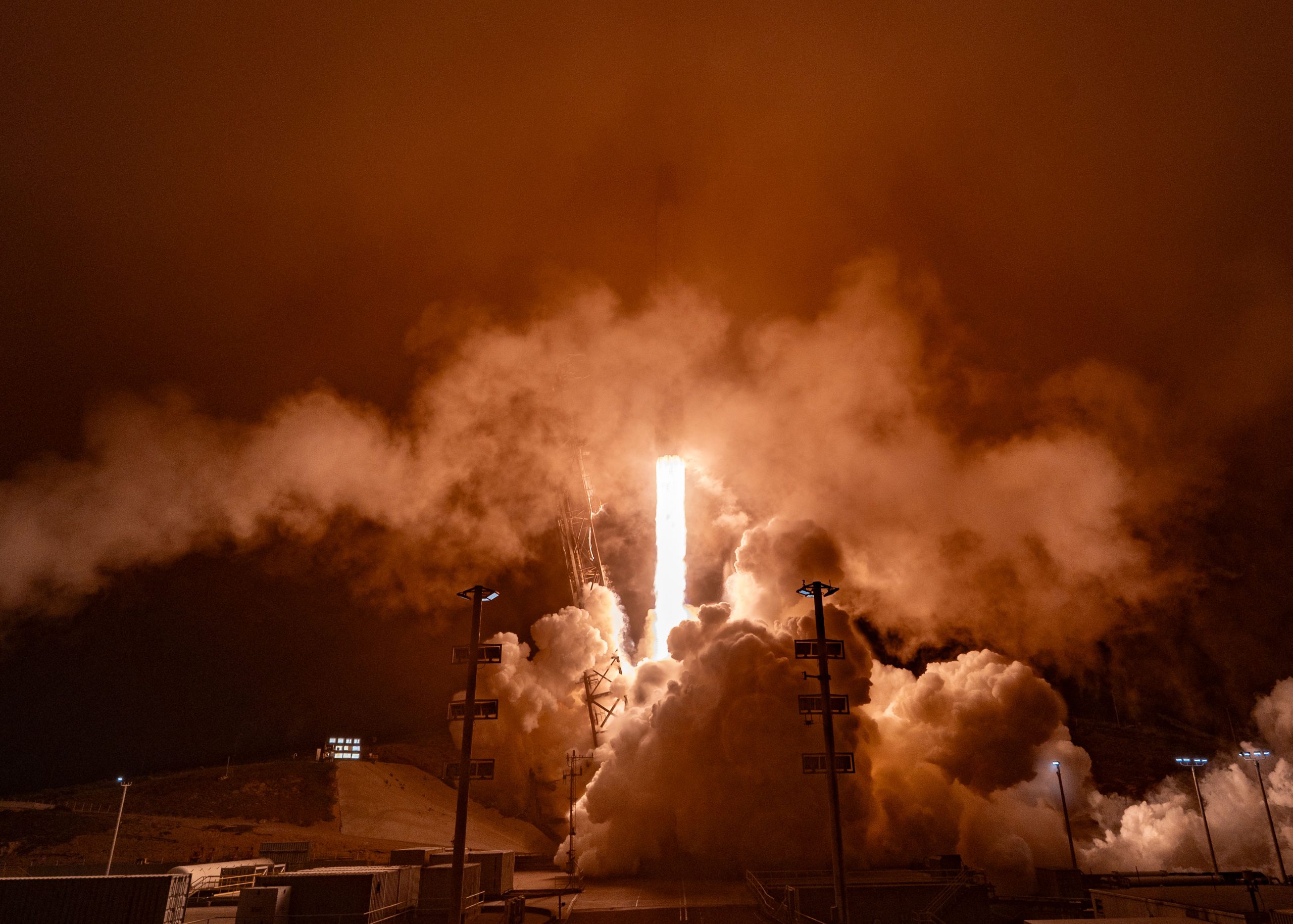
SpaceX has achieved an incredible milestone by launching its 11,000th Starlink satellite into orbit.
This accomplishment occurred during the Starlink Group 17-50 mission, which lifted off on August 19 at 04:01 UTC from Space Launch Complex 4 East at Vandenberg Space Force Base in California.
Falcon 9 launches 24 @Starlink satellites from California pic.twitter.com/UscpmAxDls
— SpaceX (@SpaceX) August 19, 2026
A Falcon 9 rocket carried 24 Starlink V2 Mini satellites on this flight, successfully deploying them into low Earth orbit approximately one hour after liftoff. The first stage booster, identified as B1097 on its twelfth flight, landed successfully on the droneship Of Course I Still Love You in the Pacific Ocean.
According to tracking data compiled around that date, this deployment brought the total number of Starlink satellites in orbit to just over 11,000.
The Starlink program began with test satellites known as Tintin A and B, launched on February 22, 2018. The first operational batch of 60 Starlink satellites followed on May 24, 2019, when a Falcon 9 rocket lifted off from Cape Canaveral. Those initial satellites marked the start of a rapid expansion that has continued for more than seven years.
SpaceX has conducted hundreds of dedicated Starlink missions since then, routinely launching batches of 20 to 30 satellites at a time using reusable Falcon 9 rockets. By mid-2026, the company had already surpassed 12,000 total satellites launched across all versions, with continuous replacements for units that deorbit as designed to manage space debris.
Looking ahead, SpaceX continues to expand the Starlink constellation to enhance global broadband coverage, capacity, and speed. The network already serves millions of users across more than 160 countries and supports applications ranging from residential internet to maritime, aviation, and emergency services.
Future plans center on next-generation hardware, including larger V3 satellites capable of delivering substantially higher throughput, which require the increased payload capacity of the Starship vehicle currently under development and testing.
In July, SpaceX submitted an application to the Federal Communications Commission seeking authority for a Gen3 constellation of up to 100,000 satellites. These spacecraft would operate in very low Earth orbit shells at altitudes near 325 kilometers and 475 kilometers. The filing requests use of existing Ku, Ka, V, and E band spectrum along with new greenfield W and D band frequencies between 92 and 275 GHz.
SpaceX states that the expanded system aims to deliver multi-gigabit symmetrical broadband to consumers, enterprises, governments, and billions of AI-powered devices worldwide while handling a majority of global internet traffic. Approval and subsequent deployment would depend on regulatory review and the operational readiness of Starship for high-volume launches.
This ambitious scale reflects SpaceX’s ongoing commitment to providing ubiquitous high-speed connectivity from space.

TESLARATI Premium Membership
$19.99 USD Fatal incident involving pilot Xpeng Iron humanoid unit at Tianhe robotics facility

Elon Musk gives a timeline for SpaceX’s first Starship catch attempt


